Every tattoo changes as it heals into living skin. Lines soften slightly, fine detail merges, and colors settle. A design that accounts for that on day one still reads clearly at year fifteen. A design that fights it turns into a gray smudge with a story attached. The difference is rarely talent. It is a handful of choices about line weight, contrast, size and placement that artists make every day.
Skin is not paper. Ink sits in the dermis, and the immune system spends years slowly moving pigment particles around, which is why edges soften with time. Sun accelerates the process. Designs with room to breathe tolerate that softening. Designs packed tight do not.
Line weight and breathing room
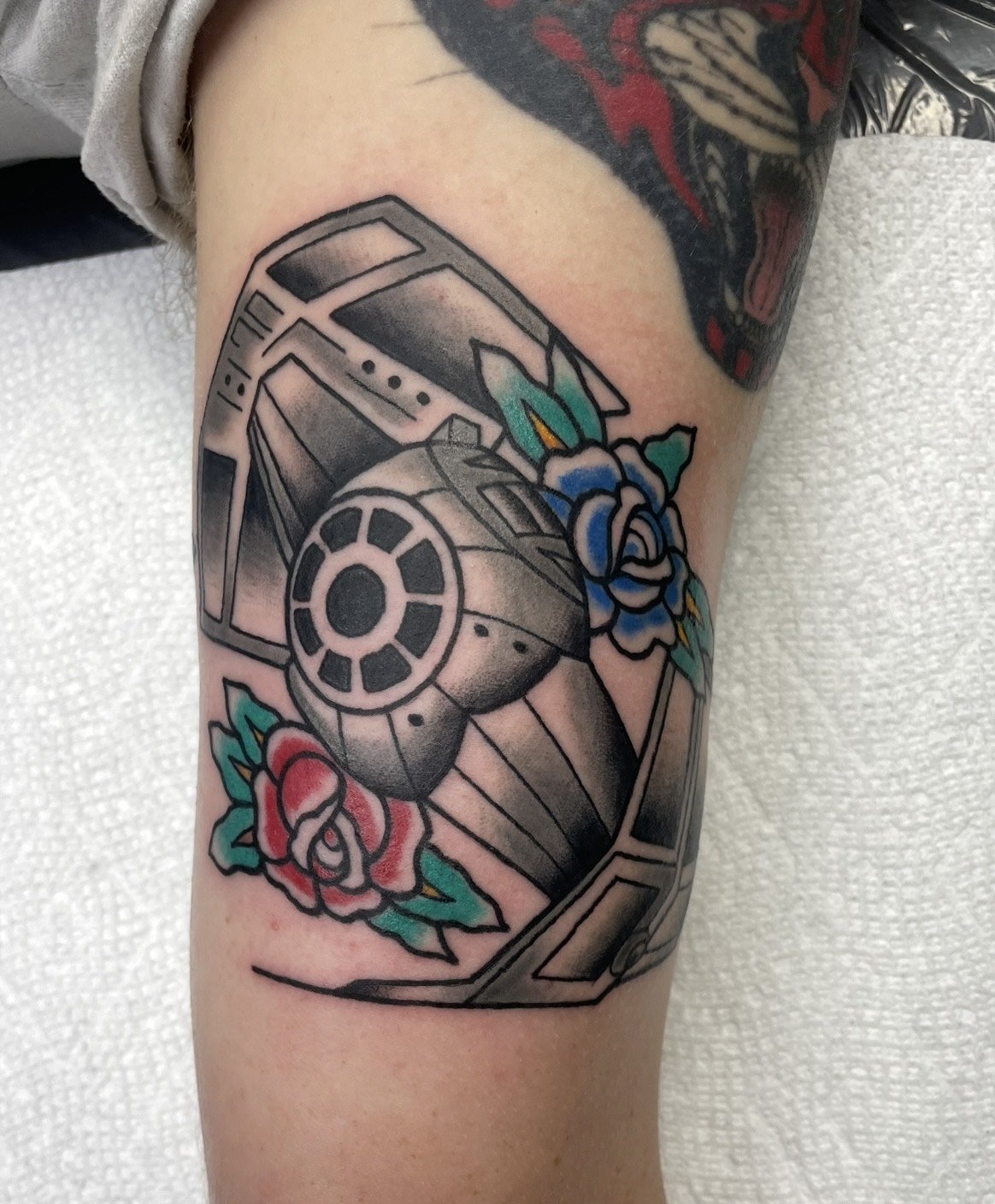
Bold lines age best. A line with real weight has somewhere to soften to; a hairline has nowhere to go but fuzzy. The same logic applies to spacing. Letters, scales, feathers and fur all start to merge when they are packed close, because each line spreads a fraction over the years and the gaps fill in. Artists who suggest sizing a detailed piece up are protecting the gaps, not the price.
Traditional tattooing figured this out a century ago: strong outlines, limited detail, clear shapes. Modern fine-line work can heal beautifully, but it needs an honest conversation about touch-ups and about which tiny elements will need to grow or go. If a design only works at the exact size on your phone screen, it needs redrawing for skin.
Contrast beats detail
Black holds. Of all pigments, black carbon ink changes least over time, which is why strong black structure carries a design for decades. Color behaves differently by family: reds and yellows fade fastest in sun, blues and greens hold longer, and pale pastel work softens quickest of all. None of that makes color a mistake. It means color pieces need black bones underneath and sunscreen on top.
Skin tone is part of the palette too. The same yellow that glows on fair skin sits muted on deep skin, because you are seeing pigment through a tinted layer. A good artist will talk plainly about which colors will show on your skin and adjust the design rather than promise a screenshot.
Placement and how skin moves
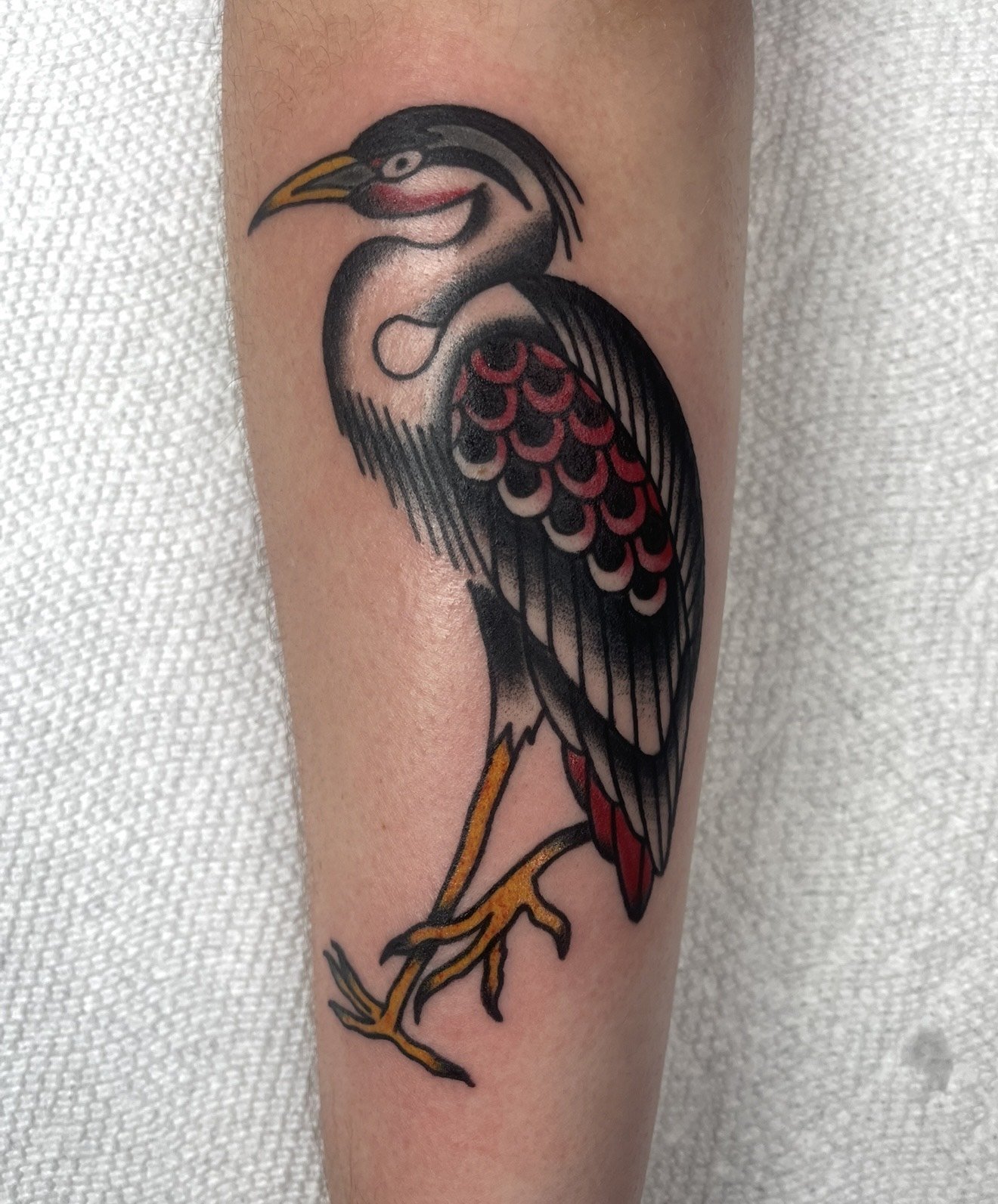
Some skin barely changes: outer upper arm, calf, shoulder blade, thigh. Some changes constantly: fingers, feet, the side of the hand, anywhere that bends, stretches, rubs against shoes or washes dishes all day. Finger and hand tattoos are famous for fading and blowouts within a few years, and many artists warn clients or decline the tiniest versions of them.
Weight change and muscle growth stretch designs gently rather than ruining them, as long as the piece was not drawn at the edge of legibility. Symmetrical designs suffer most from stretching, because the eye catches asymmetry. Organic subjects (animals, plants, water, smoke) forgive movement. Perfect circles and straight architectural lines do not.
Aging choices at a glance
| Design choice | Ages well | Ages poorly |
|---|---|---|
| Line weight | Bold, varied lines with clear outlines | Hairlines throughout, no outline |
| Detail spacing | Open space between elements | Tiny text and packed micro-detail |
| Color plan | Strong black structure under color | Pale colors with no black support |
| Placement | Calf, outer arm, thigh, back | Fingers, feet, high-rub areas |
| Sun habits | Sunscreen on healed work | Regular unprotected sun exposure |
None of these rows make a design good or bad on day one. They predict how it will look when the client in the chair is ten years older, which is the conversation worth having before the stencil goes on.
One more test costs nothing: print the design at the actual size you want and tape it where it will live for a day. Look at it from across the room, in a mirror, in normal light. If you cannot tell what it is from six feet away on paper, skin will not improve it. Artists do a version of this with the stencil, and clients who have already done it at home arrive with far better instincts about size.
Common questions
Do fine-line tattoos always fade badly?
No, but they soften faster and usually need a touch-up sooner than bold work. Fine lines heal best when the design keeps enough spacing between elements and the client protects it from sun. Ask the artist to show healed, not fresh, fine-line photos.
Why does my artist want to make my tattoo bigger?
Because ink spreads slightly in skin over the years. Extra size keeps letters open, faces readable and small details separated. A design drawn slightly larger today is the version that still reads clearly a decade from now.
Which colors last the longest in a tattoo?
Black lasts longest and changes least. Blues and greens hold up well, while reds, yellows and pale pastels fade fastest, especially with sun exposure. Sunscreen on healed tattoos slows fading for every color.
← All guides from Lucky 13 Tattoo Studios← Back to Lucky 13 Tattoo Studios