A cover-up is not a magic eraser. It is a new tattoo designed to absorb an old one, using darker pigment, busy texture and smart placement so the eye reads the new piece instead of hunting for the old shapes underneath. Done well, visitors cannot find the original even when they know it is there. Done badly, you end up with two tattoos competing in the same patch of skin, and the darker one is usually the new regret.
The honest starting point: a cover-up almost always needs to be bigger and darker than the piece it hides. How much bigger and how much darker depends on what is underneath, and an artist can only judge that by seeing your skin in person, in normal light, not from a filtered photo.
What makes a tattoo coverable
Old tattoos that have faded are the easiest candidates. Ink lightens over the years, and a piece that has softened to gray-blue gives the artist far more freedom than a fresh, saturated black tattoo. Small pieces are easier than large ones for the obvious reason: the new design must extend past the old edges in every direction, so a palm-sized old tattoo needs a considerably larger new one.
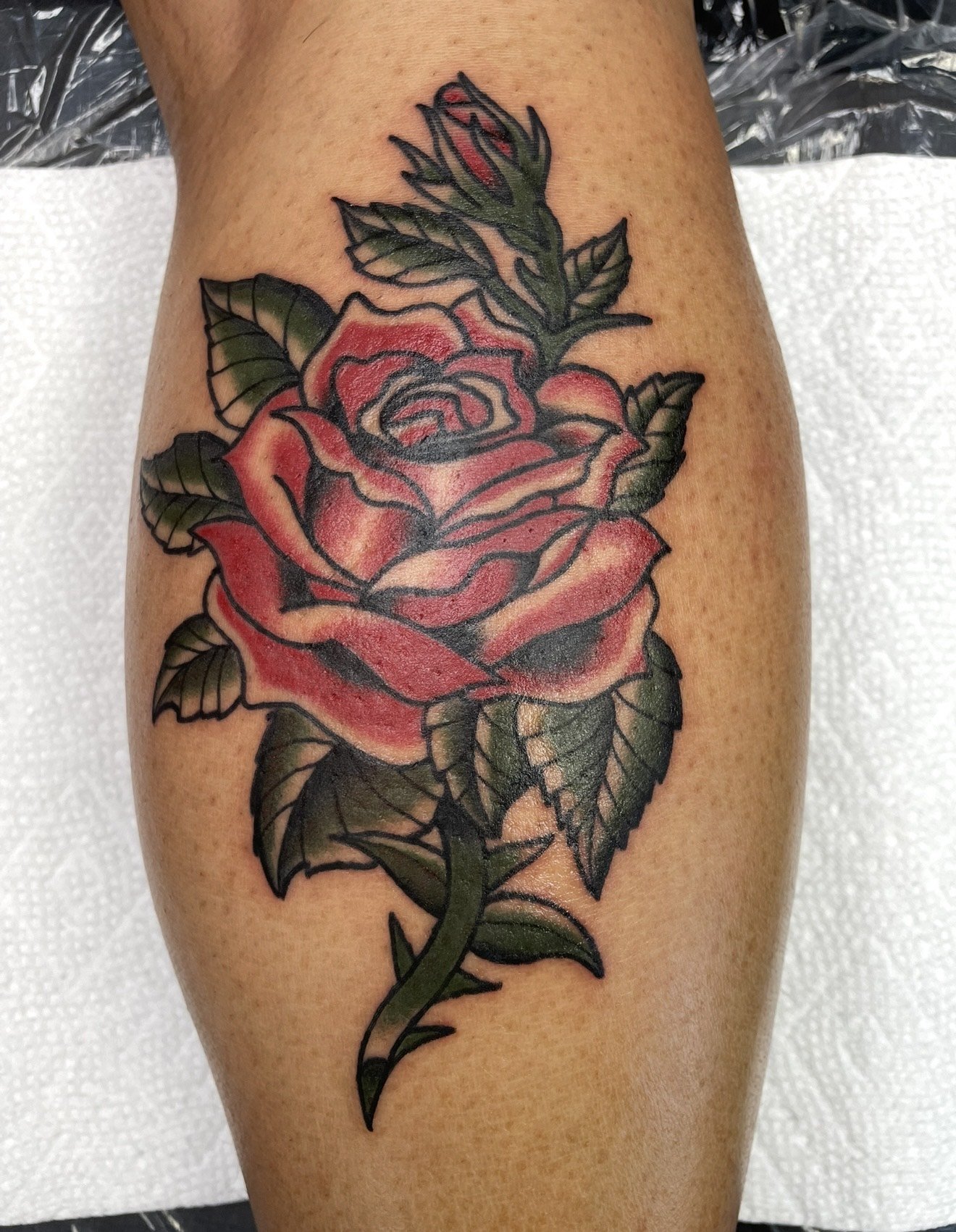
Dense black work, thick tribal bands and dark lettering are the hardest cases. Black cannot be covered with anything lighter, because tattoo ink works like layered tinted glass: the darker layer underneath always shows through. The new design has to work at or below the value of the darkest parts of the old one, which pushes cover-ups toward rich color, deep shading and subjects with natural dark areas: feathers, fur, scales, foliage, night skies, waves.
The design process, step by step
A cover-up consultation is more technical than a normal one. Expect the artist to study the old piece, trace it, and sketch directly over the tracing. The sequence usually runs like this:
- Assess the old tattoo. The artist checks darkness, size, scarring and how much the ink has faded, and says plainly what is and is not possible.
- Choose a subject with dark zones. You pick a new image whose natural shadows and texture can sit exactly where the old ink is darkest.
- Draw over the old shapes. The new design is drawn on a tracing of your tattoo, so old lines are redirected into new contours instead of fought.
- Test the stencil on skin. The stencil is placed and checked standing, sitting and moving, because cover-ups fail at the edges first.
- Tattoo in stages if needed. Large cover-ups are often outlined and shaded first, then colored after healing, so the artist can see how the old ink settles.
Notice what is missing from that list: picking a design from a catalog and shrinking it to fit. Cover-ups are custom by necessity. The old tattoo dictates the map, and the new design is drawn around that map.
Laser fading as a first step
For very dark or very large pieces, a few laser fading sessions can change the math. Laser does not need to remove the tattoo; lightening it by half opens up design options that were impossible over full-strength black. Artists and laser technicians work together on this more often than people realize, and a good studio will tell you honestly if fading first will get you a much better result.
The trade-off is time. Fading takes multiple sessions spaced weeks apart, so the full project can stretch across a season. For a tattoo you will wear for the rest of your life, most people who take this route consider the wait worth it. The alternative, forcing a cover over ink that is too dark, produces a piece you will want to cover again.
What to expect from the result
A successful cover-up reads as a normal tattoo. In certain light, at certain angles, you may faintly see the ghost of an old line inside a dark area of the new piece. That is the realistic standard, and any artist promising total invisibility in every light is overselling. Scarring from the original tattoo, if it exists, will also remain, because new ink does not flatten raised skin.
Bring an open mind about the subject. The clients who end up happiest are the ones who fall in love with the new design on its own terms. The ones who insist on a small, pale, delicate piece over a big black one are asking physics for a favor it will not grant.
Common questions
Can any tattoo be covered up?
Almost any tattoo can be improved, but very dark, large or heavily scarred pieces limit the options. The new tattoo must be bigger and at least as dark as the old one in the covered areas. An in-person consultation is the only way to get a straight answer for your piece.
Will the old tattoo show through the new one?
A well-planned cover-up hides the old design in normal viewing. In bright light or at close range, a faint trace of the darkest old lines can sometimes be seen inside dark areas of the new work. That is normal and is far less noticeable than the original tattoo.
Should I get laser removal before a cover-up?
Only if the old tattoo is too dark or large for the design you want. A few fading sessions can lighten ink enough to make lighter, smaller cover-ups possible. Your tattoo artist can tell you whether fading first would meaningfully improve your options.
← All guides from Lucky 13 Tattoo Studios← Back to Lucky 13 Tattoo Studios